E1 & E2 Elimination Mechanisms
Master elimination reactions — mechanism, geometry, and Zaitsev vs. Hofmann product prediction — with a dedicated one-on-one Ochem tutor.
Part of our complete Ochem Tutor program, alongside our full mechanisms tutoring and substitution reactions.
Book Your Trial ClassWhat We Cover
Complete Guide: E1 & E2 Elimination Reactions
How elimination competes with substitution, and everything that decides E1 vs. E2 and Zaitsev vs. Hofmann product selectivity.
When Elimination Competes: E1 & E2
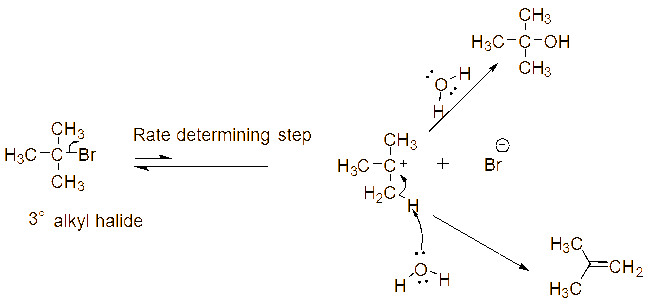
The carbocation formed in SN1 can also lose a β-hydrogen to a base and form an alkene instead — this competing pathway is an elimination reaction. Commonly, a weak nucleophile acts as the base in this pathway. Since it follows the same first-order kinetics as SN1, it's called unimolecular elimination, abbreviated E1 (E stands for elimination and 1 for unimolecular).

Mixtures of substitution and elimination products result under both SN1 and E1 conditions; higher temperature increases the elimination percentage. On an unsymmetrical alkyl halide, E1 gives a mixture of elimination products along with a minor amount of SN1 substitution product. The more substituted alkene (major product) is the Zaitsev product; the least substituted is the Hofmann product.
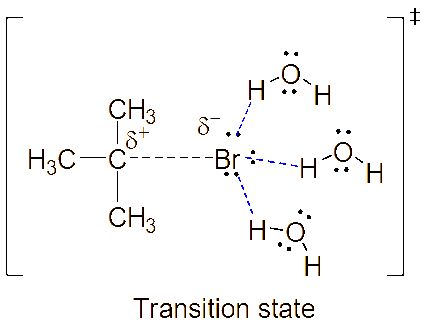
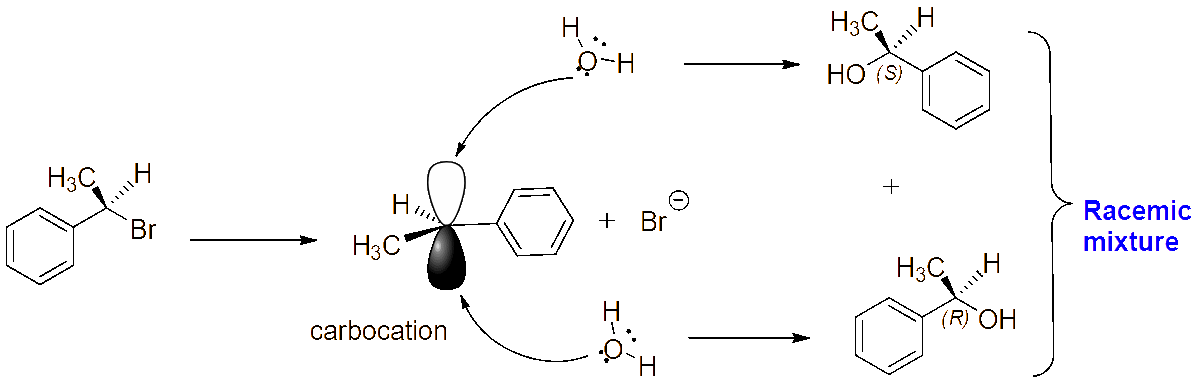
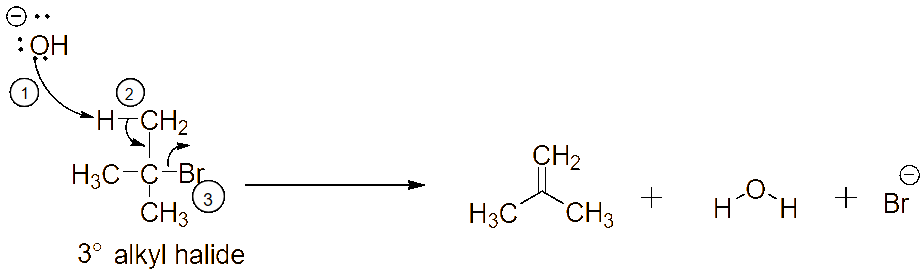
Recall: no SN2 occurs on a tertiary alkyl halide (steric hindrance), and a base and nucleophile are chemically the same species. So when the nucleophile can't approach a tertiary carbon, it behaves as a base instead and abstracts a proton from the β-carbon.
This reaction follows second-order kinetics, similar to SN2, and is called bimolecular elimination, abbreviated E2 (E stands for elimination and 2 for bimolecular).
![Ochem Tutor E2 rate equation: Rate = k[alkyl halide][base]](/images/sn-mechanisms/ochem-tutor-e2-rate-equation.gif)
E2 Reaction Mechanism
The bimolecular elimination mechanism occurs in a single step, with three changes happening simultaneously:
- Abstraction of a proton by the base
- Conversion of sp3 to sp2
- Departure of the leaving group
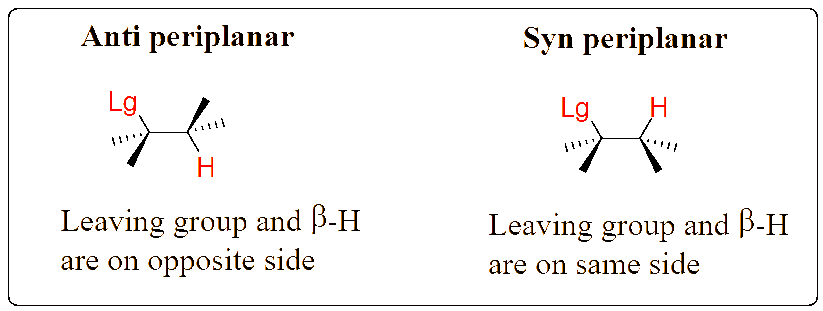
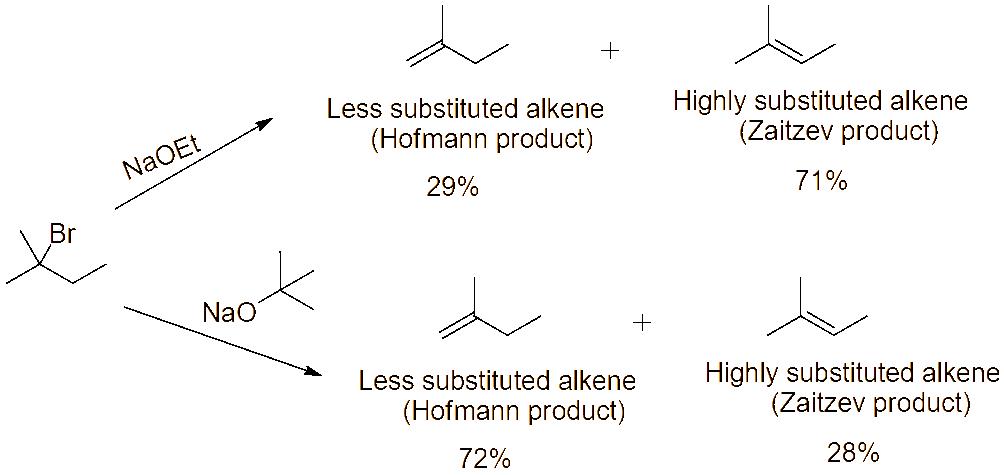
For a smooth E2 reaction, the β-hydrogen and leaving group need an anti-periplanar arrangement. E2 is more regioselective than E1. Like E1, E2 also gives a mixture of products and the Zaitsev product is always predominant — but while the alkene mixture in E1 is not controlled, in E2 it is possible to control the Hofmann vs. Zaitsev product distribution by using a highly sterically hindered base, a bulkier substrate, and a larger leaving group. Increasing bulkiness of the substrate, increased leaving-group size, and sterically hindered bases all favor the Hofmann product.
Stereoselective vs. stereospecific E2
If the alkyl halide has two equivalent β-positions, there's no regioselectivity issue, but the base may abstract either β-proton, giving two stereoisomeric products in unequal amounts (stereoselective). If the alkyl halide has only one β-proton, only one stereoisomeric product is possible (stereospecific) — provided the leaving group and that β-proton are anti-periplanar.

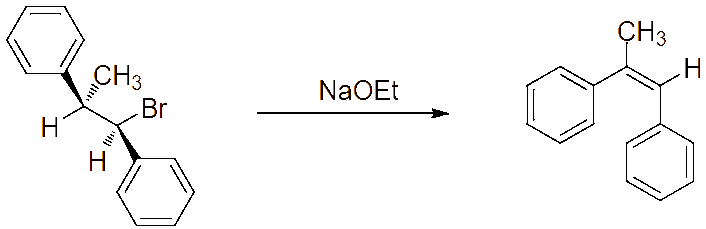
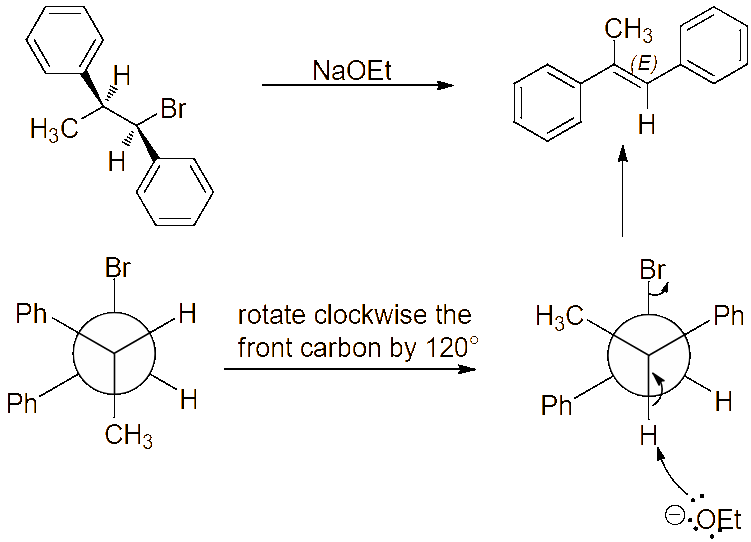
If the leaving group and β-proton aren't already anti-periplanar, the molecule will rotate into that arrangement before the elimination reaction can occur.
Common Struggles With Elimination Reactions
“I can't tell when a reaction is substitution vs. elimination.”
We build a single decision framework covering both substitution and elimination together, since the same substrate/nucleophile/base signals determine which pathway wins.
“Anti-periplanar geometry doesn't make sense to me.”
We use 3D models and Newman projections to make the geometric requirement for E2 visually intuitive, not just a rule to memorize.
“I mix up Zaitsev and Hofmann products.”
We connect product selectivity directly to base size and reaction conditions, so you can predict the major product instead of guessing.
Meet Your Tutor
Dr. R Ramajayam
Organic Chemistry Tutor
Frequently Asked Questions
E2 is a single-step, concerted elimination requiring anti-periplanar geometry, typically favored by strong, bulky bases. E1 proceeds through a carbocation intermediate, similar to SN1, and is favored by weaker bases and more substituted substrates.
Ready to Master Elimination Reactions?
Book a trial class and get E1/E2 to click with clear, step-by-step reasoning.
Book Your Trial Class